
Transparency is a core part of Go & Grow. While Go & Grow does not issue loans itself, it is linked to the performance of Bondora Group’s underlying loan portfolio.
That is why key portfolio statistics, including Bondora Group’s loan performance, defaults, recoveries, portfolio quality, and risk metrics, are important for understanding what drives your returns.
This report brings the most relevant data together in one place. So, let’s take a look at the numbers.
Loan portfolio quality and composition
A healthy and well-diversified portfolio helps support more stable performance, reduce concentration risk, and create a stronger foundation for sustainable returns over time.
Bondora manages the loan portfolio through both responsible lending decisions at origination and ongoing portfolio monitoring after loans have been issued. This includes tracking portfolio composition, repayment behavior, and market-level performance over time.
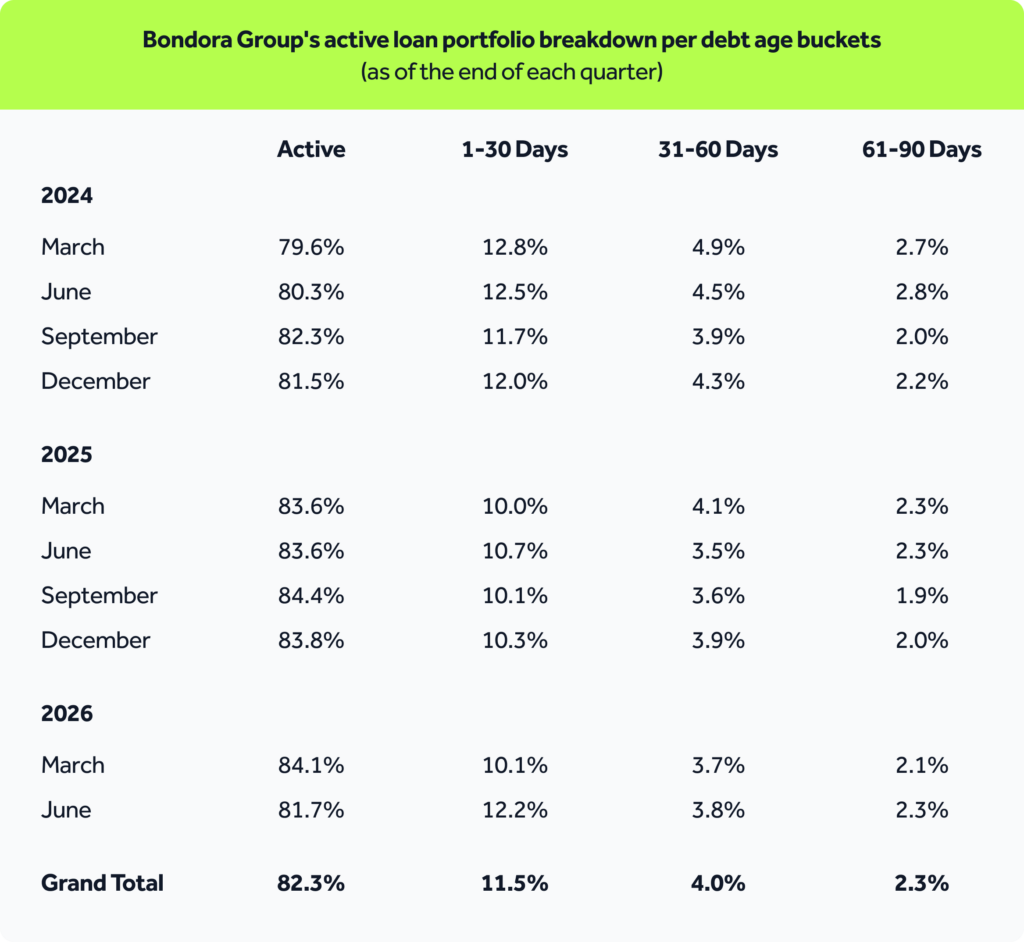
The active portfolio has remained consistently stable, with almost 80% of loans remaining active across all periods. Delinquency levels across different aging buckets have shown only minor variations, indicating stable portfolio performance during the observed period.
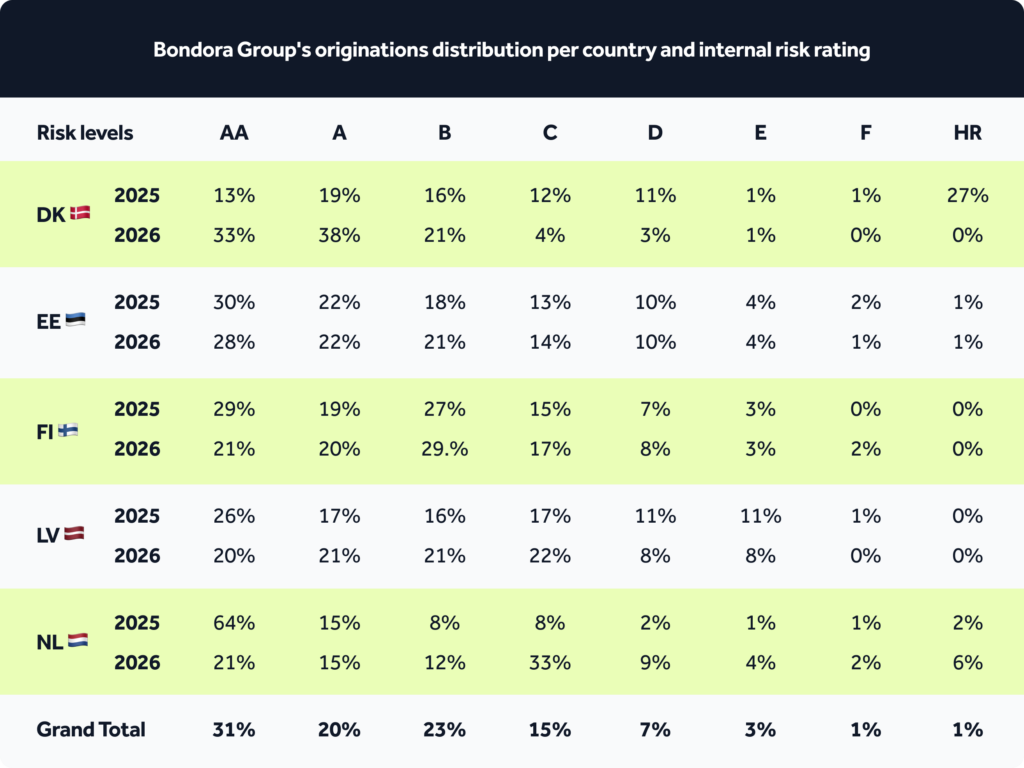
The majority of Bondora’s originations fall within low-risk levels. This reflects a prudent approach to risk management with an increasing proportion of loans in the AA-C risk categories across all markets.
Longer loan durations can make monthly payments more manageable for customers when assessed responsibly. For Bondora, loan term decisions are part of the broader credit-risk assessment and are balanced against affordability, expected repayment behavior, and long-term portfolio performance.
Expected returns: Understanding IRR
The expected internal rate of return (IRR) is one metric used to assess the projected return potential of the loan portfolio.
The IRR forecast is based on a combination of historical performance data and the current behavior of active loans. Here’s how it works:
- IRR from previously issued loans is analyzed.
- Current loan performance is closely monitored, especially key indicators such as default rates across different stages of the loan lifecycle.
- Based on this data, the expected performance of the current loan portfolio is projected, and the IRR is calculated.
Importantly, the forecasted IRR accounts for both expected defaults and recoveries. Expected defaults are treated as losses and expected recoveries are added back in as gains. This gives a forecasted net return estimate for the loan portfolio.
After accounting for expected defaults and recoveries, the forecasted IRR has remained above the Go & Grow target return of up to 6%* p.a. throughout the past several years:
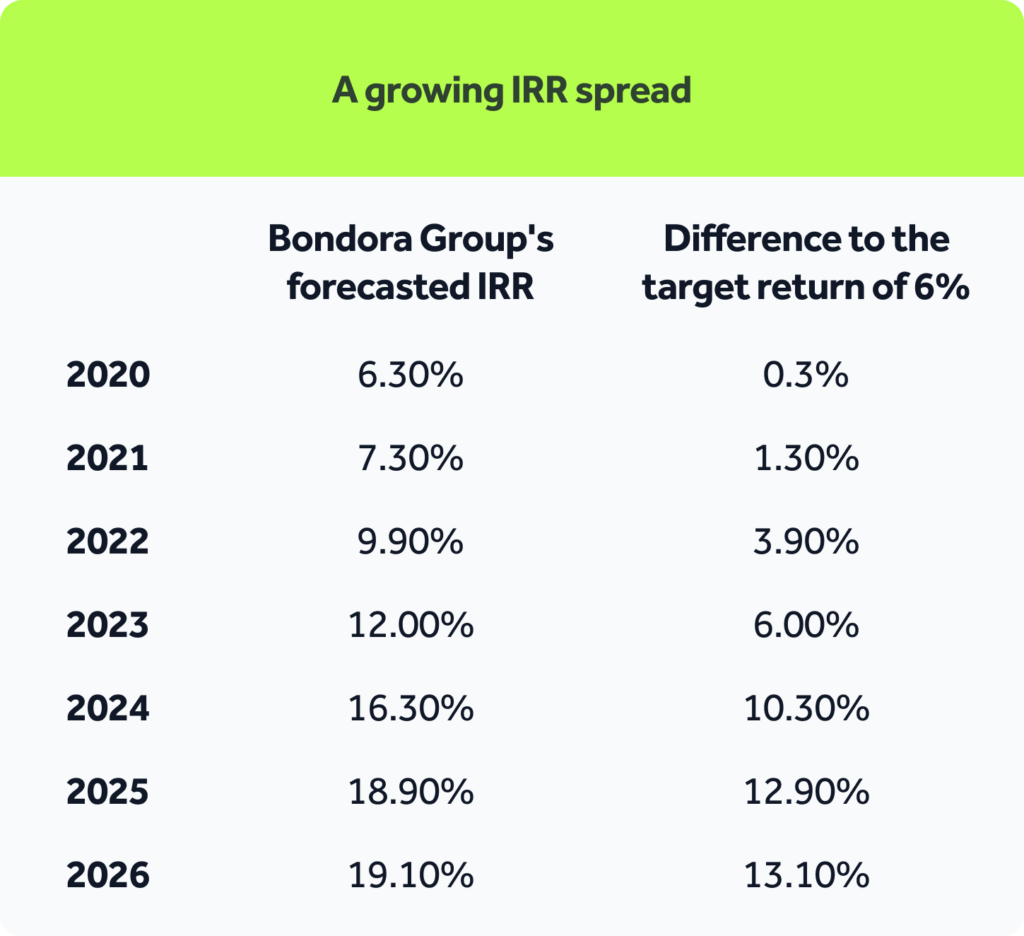
The spread has been steadily growing, reflecting improvements in credit risk control and the overall strength of the portfolio. These factors help support the long-term return model behind Go & Grow, while liquidity management remains a separate and important part of enabling near-instant access under normal market conditions.*
Defaults explained: What they mean and how they are measured
In lending, defaults are a normal part of the loan lifecycle. What matters most is how they are measured, managed, and recovered.
A loan is considered in default when payments are more than 90 days overdue, and the customer contract has been terminated due to arrears. A default does not necessarily mean the full amount is lost.
Bondora starts monitoring and addressing repayment issues before a loan reaches default, from the first signs of payment difficulty. Default marks the point where the loan moves into a more structured recovery process, with the aim of recovering as much of the outstanding amount as possible.
Recovery outcomes vary by country, and in some markets, Bondora is able to recover up to 70% of the defaulted amount. This is why defaults should always be viewed together with recoveries rather than in isolation.
At the same time, Bondora’s goal is to treat every credit customer with respect and fairness throughout the recovery process. Financial challenges can happen, and Bondora’s recovery strategy is built around fair, compliant, and responsible debt management.
To better understand the potential impact of defaults, Bondora also examines Loss Given Default (LGD), which reflects the remaining loss after expected recoveries. This helps assess the portfolio’s long-term health.
PD12: A key risk metric
Another important metric used in Bondora’s portfolio analysis is PD12, which measures the share of loans that default within 12 months of issuance.
PD12 helps track how each loan cohort performs during its first year and is one of the key inputs used when calculating the forecasted IRR.
Bondora’s PD12 results have steadily improved, reflecting stronger risk models, more refined borrower assessment, and continued improvements in credit risk control.
Together with strong recovery outcomes, a balanced risk appetite, and the healthy IRR spread outlined earlier, this provides a clear picture of long-term portfolio performance and ongoing improvements in credit risk control.
Market-specific performance trends
Bondora’s portfolio has developed through continuous improvement. Over time, stronger systems, refined risk models, and structured credit-risk management have contributed to improved performance across recent cohorts.
The overview below highlights selected developments across Bondora’s key markets.
Note: Q3 2025 statistics will be available after Q3 2026, once the full 12-month observation period required for PD12 measurement has passed.
🇩🇰Denmark
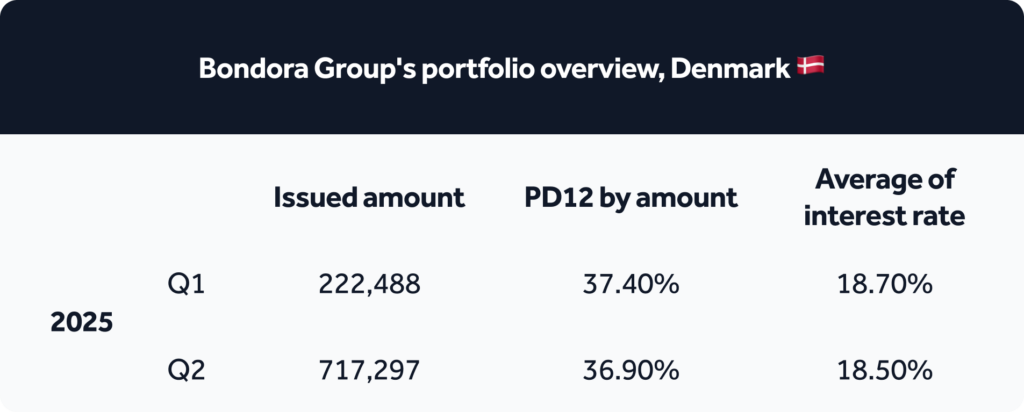
- 2025: As with any early-stage market, performance may be more volatile while acquisition, pricing, and scoring models are being optimized.
🇪🇪Estonia
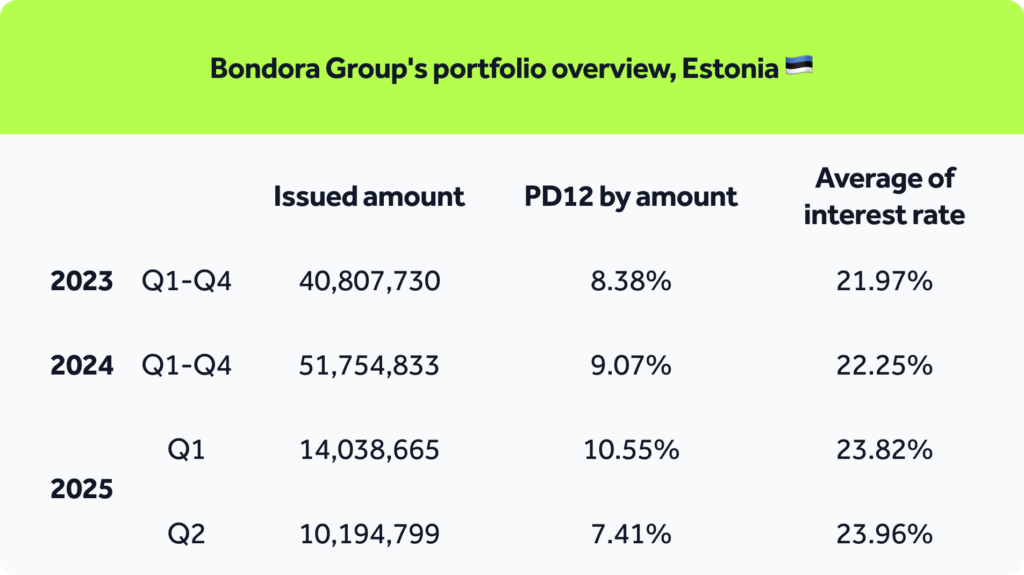
- Q2 2023: Performance optimization contributed to the strongest spread between interest rates and PD12 in Estonia to date.
- As one of Bondora’s most established markets, Estonia has a longer performance history. Its key credit-risk indicators, including PD12 and the spread between interest rates and default rates, have improved compared with earlier years.
🇫🇮Finland
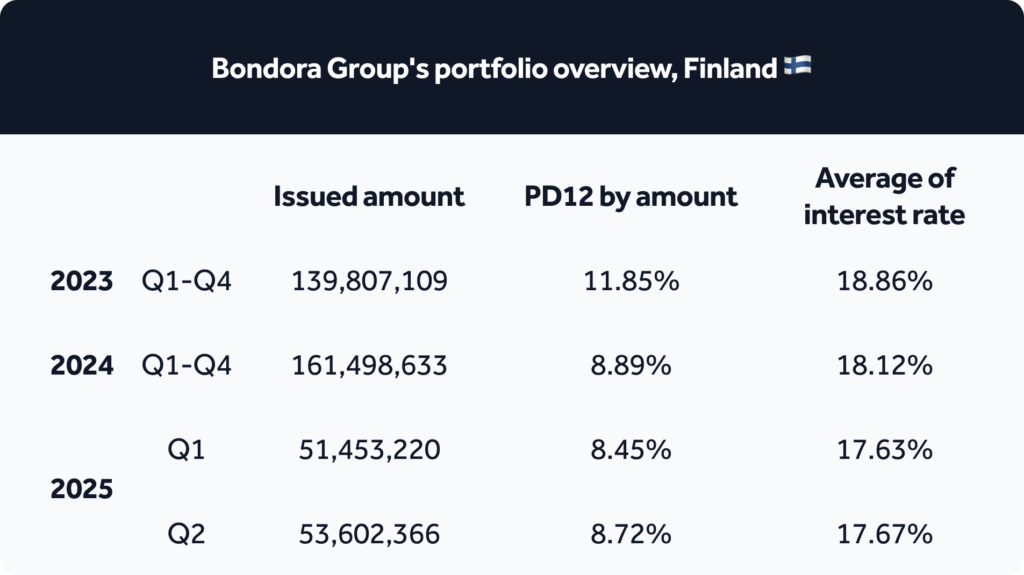
- Q1 2023: Performance temporarily softened as operations were scaled.
- Q3 2023–Q1 2024: Significant improvement when PD12 dropped from 14% to 8.3%, resulting in the strongest spread since market launch.
- Finland now consistently represents around 60% of Bondora’s total portfolio, making these improvements especially important for overall portfolio performance.
🇱🇻Latvia
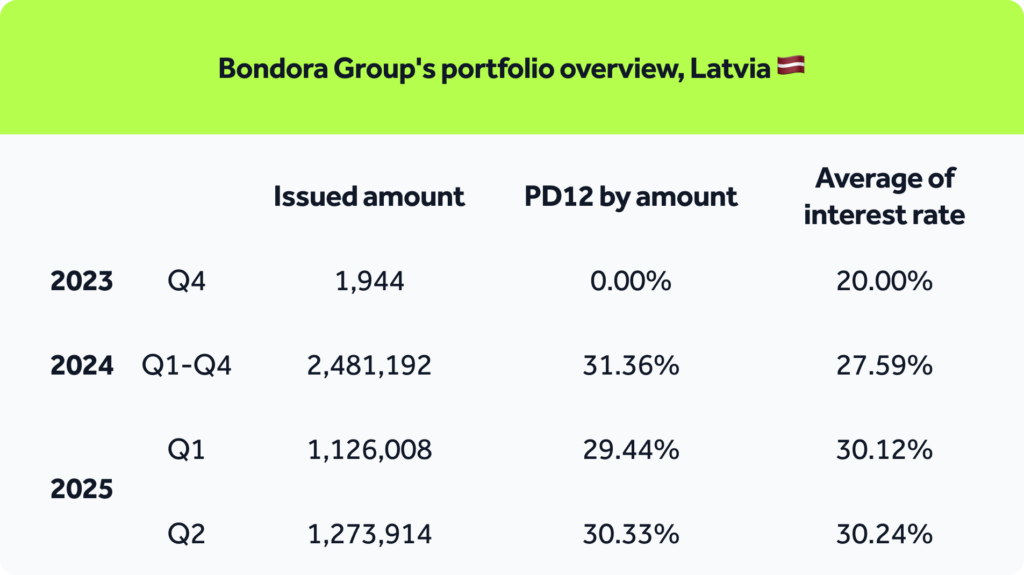
- Q1 2024: As with any early-stage market, performance may be more volatile while acquisition, pricing, and scoring models are being optimized.
🇳🇱Netherlands
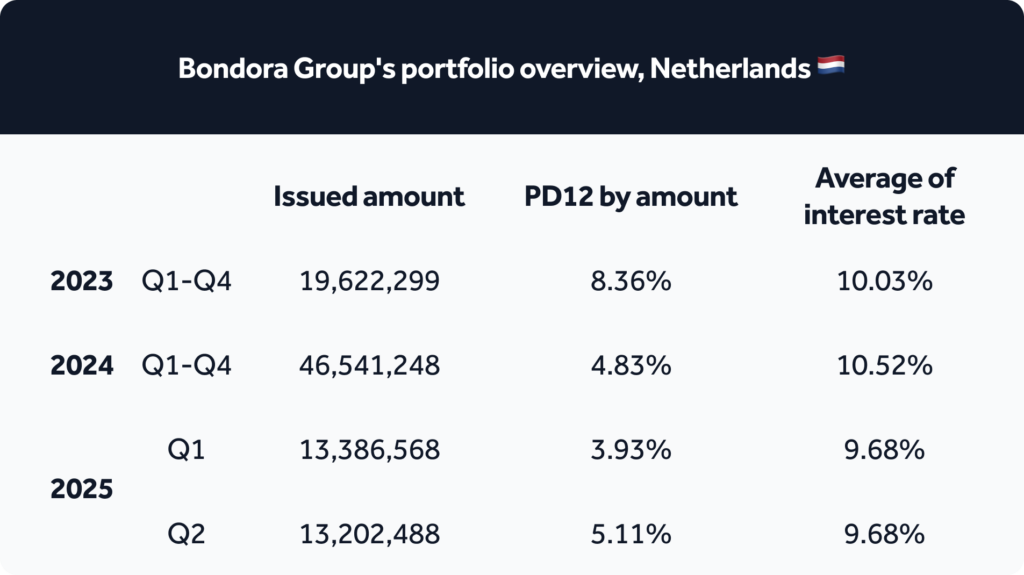
- Q2 2023: Bondora began scaling loan issuance with optimized acquisition.
- Q3 2023: The market expanded with the initial scoring model.
- Q4 2023: Achieved the strongest risk-reward performance since the market launch.
Across all markets, Bondora’s portfolio continues to improve, supported by ongoing work to refine acquisition, pricing, scoring, and portfolio monitoring.
How Bondora manages loan recoveries
Understanding how defaults are measured is only part of the picture. Because defaults are a normal part of lending, long-term portfolio performance also depends on what happens after default: how effectively unpaid amounts are recovered over time.
What are typical recovery outcomes?
Before diving into the process itself, let’s look at the results. Here’s how much principal is typically recovered on a €1,000 loan that reaches default in these markets:
- Estonia: €667
- Finland: €689
- Latvia: €667
- Netherlands: €667
These projections are based on a 10-year period and historical recovery data. In newer markets such as Latvia and the Netherlands, Bondora uses comparable country-level data and early trends to estimate outcomes.
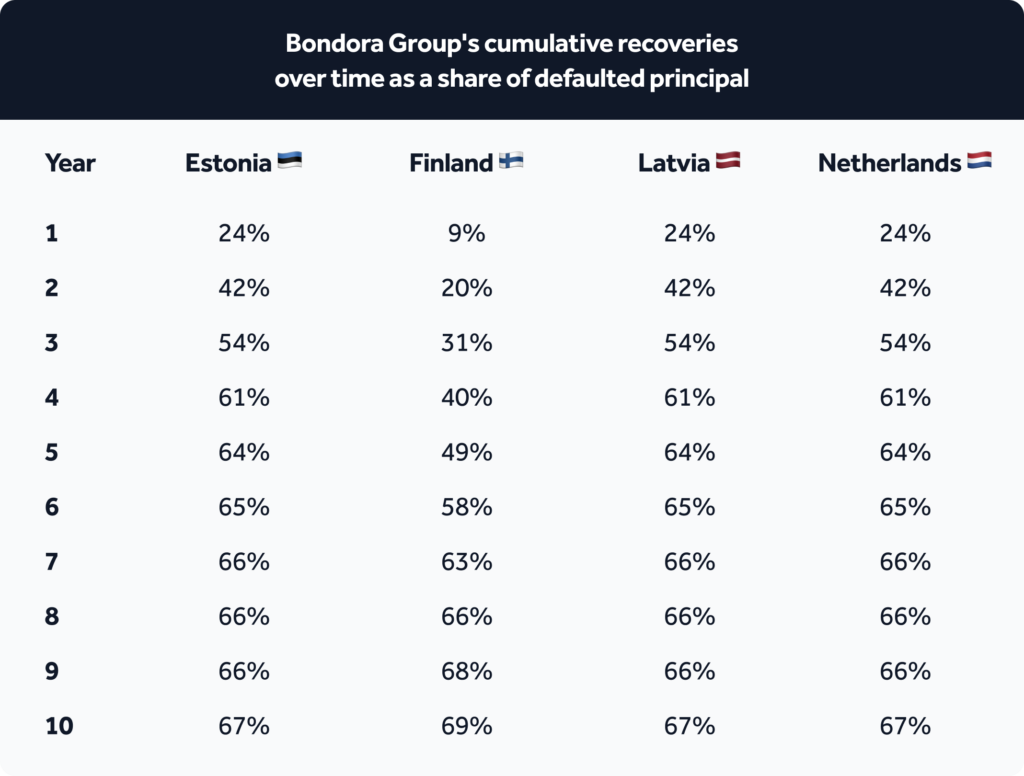
In the first three years after default, Bondora typically recovers between 31% and 54% of the outstanding principal, depending on the country. These repayments accumulate gradually, year after year, through structured recovery efforts.
These figures provide a useful historical reference point, but actual outcomes may vary by market, cohort, and individual case.
While legal steps may be part of the process, many repayments are made through collaborative recovery efforts. Recoveries often take time, which is why consistency and long-term follow-up are important.
That’s why Bondora has developed a structured, multi-step recovery process that delivers results while treating every customer with fairness and respect. Read more about how the 4-step process works.
How loans are currently distributed by stage
Here’s a snapshot of where defaulted loans stand in the recovery journey:
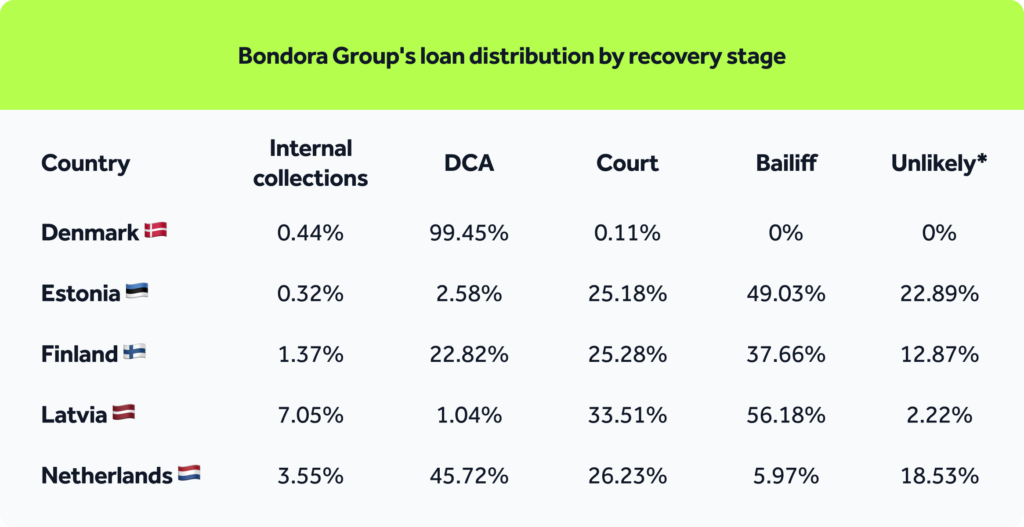
Recoveries are more than a number. They reflect a structured effort to recover outstanding amounts on defaulted loans, carried out respectfully and in line with local laws.
Bondora’s approach helps ensure that even when defaults happen, recovery efforts continue in the background and can support portfolio performance over time.
Transparency, fairness, and long-term thinking are at the heart of how Bondora manages every case.
Looking ahead: Ongoing transparency and regular updates
Portfolio quality, risk metrics, defaults, and recoveries all play important roles in understanding the performance behind Go & Grow. This report brings the key data together in one place and will be updated over time.
For more regular updates, you can explore our statistics page and monthly statistics articles, where we share the latest figures on investments, investor returns, loan originations, and market activity.
Bondora Group’s audited annual financial reports are also available in our Help Center, providing a broader view of the group’s financial performance.